
Back to map
Church Yard
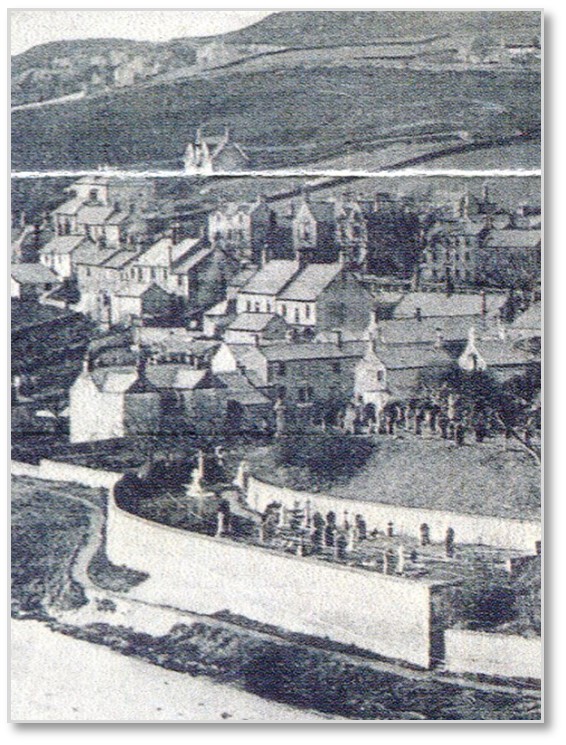
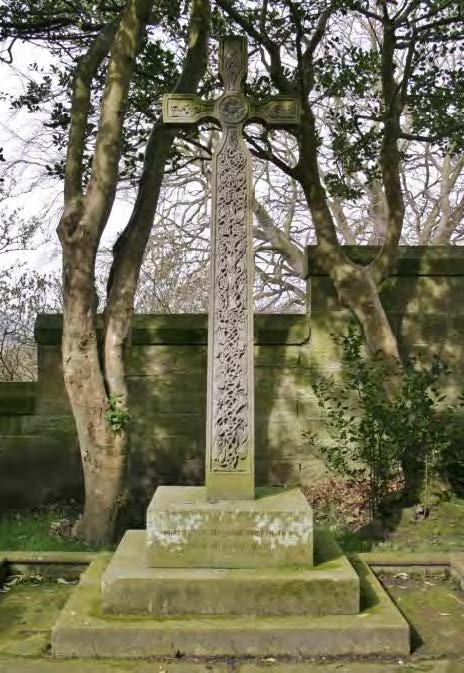
The ‘Closed’ Grave Yard consists of two parts: the upper and lower plots. The lower plot, accessed via steps from the upper graveyard, was first used in 1900 as the burial place of the 1st Lord Armstrong of Cragside. In later years other members of the Armstrong family were buried in this area including the 1st and 2nd Barons Armstrong of Bamburgh and Cragside, their wives and General Sir John Ayde who died in 1900 aged 80. He fought in both the Crimean War and the Indian Mutiny and was credited with putting down the Egyptian rebellion of Arabi Pasha. He later became the Governor of Gibraltar.
This area is separated from the remainder of the lower graveyard by iron railings and an entrance gate. Or, at least, was. The railings separating both areas were removed as part of the war effort and the gates finally removed in 2005. Whilst the Armstrong plot was supposed to be the responsibility of the Armstrong Estate it is now maintained locally on a voluntary basis. Both are now in good repair.
It was once suggested that sheep be used to keep the grass in check and reduce maintenance costs but this idea fell on stony ground along with other ideas of creating a small park although there is now an information board and a few seats where you can rest and meditate. Maybe even pen a modern Gray’s Elegy.
There is a beautiful headstone in the lower graveyard erected to the memory of Walter Mavin, The Coquet Angler. Walter was born in 1814 and died in 1900 and was reputed to have trained Lord Armstrong in the arts of fishing. The stone shows a mountain stream, with a kingfisher on a rock whilst on the bank are a fishing rod, creel and fish. The inscription reads:
“But where’s the auld fisher, sae bent and sae lame,
Wha cam’ ilka spring wi’ his rod ab’ hois creel?
Death’s ca’d him awa’ to his lang latest hame,
An he’ll wander nae mair by the stream le lo’ed well.”
Local lore says that Rothbury Castle stood here, overlooking the River Coquet. No trace remains today although, in a sketch published by Dippie Dixon, Rothbury Hall can be seen and it is thought that with its square tower but no crenellations this building may have been the castle. In an old photograph circa 1843 there appears to be a tower peeking over the sides of houses in that area. Mr J. Reynaulds is credited with identifying this.
The prison which is mentioned as holding Robert of Crelinge and James “le Scot” in 1256 was probably the dungeon like basement below the original building. In any event James was put on trial whilst Robert managed to escape, taking sanctuary in Rothbury Church where he confessed to larceny. William de Valence who had charge of the castle at this time had to answer for the escape whilst the town of Rothbury was fined for not having retaken the escapee.
Part of the hall was in use till the middle 1800s but when the church yard was extended in 1869 it was finally demolished and its foundations removed.
Next door to the church is the Parish Hall
 Rothbury and Coquetdale History Society